

You can add our clinic's Line account or send us a Facebook DM to get more information or schedule a consultation with our doctors right away.
Written by Dr. Supattra Bun-un
Endodontist
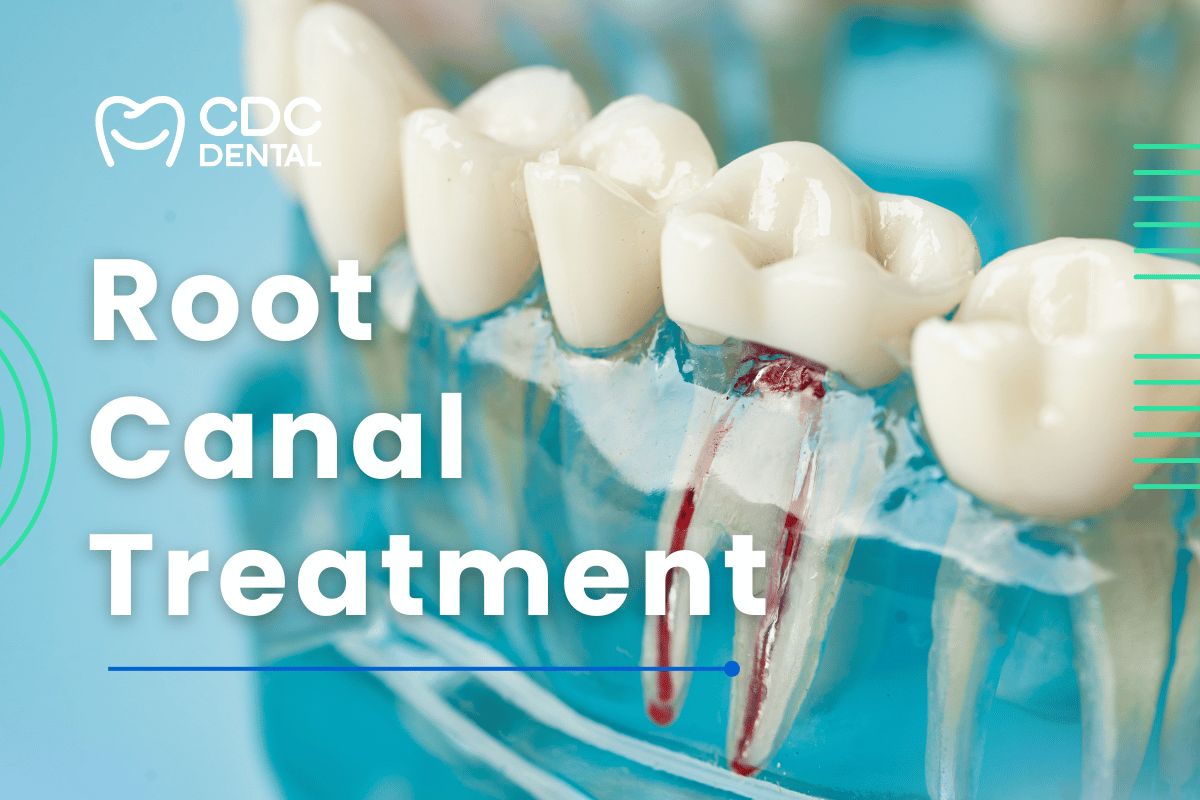
When tooth decay reaches the nerve or causes infection, many wonder whether they need a root canal or an extraction. Making the right decision will help save your natural tooth for years to come. Today, our English speaking dentist and team at CDC Dental will explain everything you need to know about root canal treatment Thailand. Our clinic has two convenient locations in Bangkok - near BTS Saphan Khwai and Lat Phrao 109, and we proudly offer the same price as locals with no foreigner markups.
For those asking what a root canal is, our dentists explain it as a dental procedure aimed at treating an infected or dead tooth caused by deep decay, cracks, or trauma. It involves removing the infected dental pulp from inside the tooth, then thoroughly cleaning and sealing the root canal to prevent reinfection. This method saves your natural tooth instead of extracting it.
To understand how a root canal works, let's briefly look at the structure of a tooth. A tooth consists of 4 main layers:
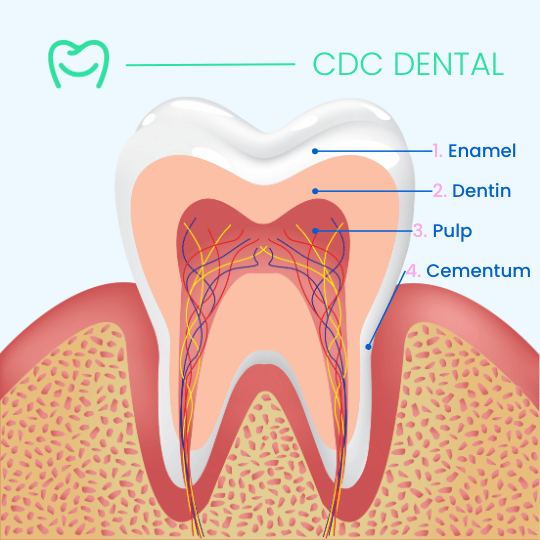
If decay is limited to the enamel or dentin layer, your dentist can restore it with a simple dental filling. However, when the decay penetrates deep into the dental pulp, bacteria spread inside, which usually causes severe toothache. These symptoms are a clear sign that you need a root canal.
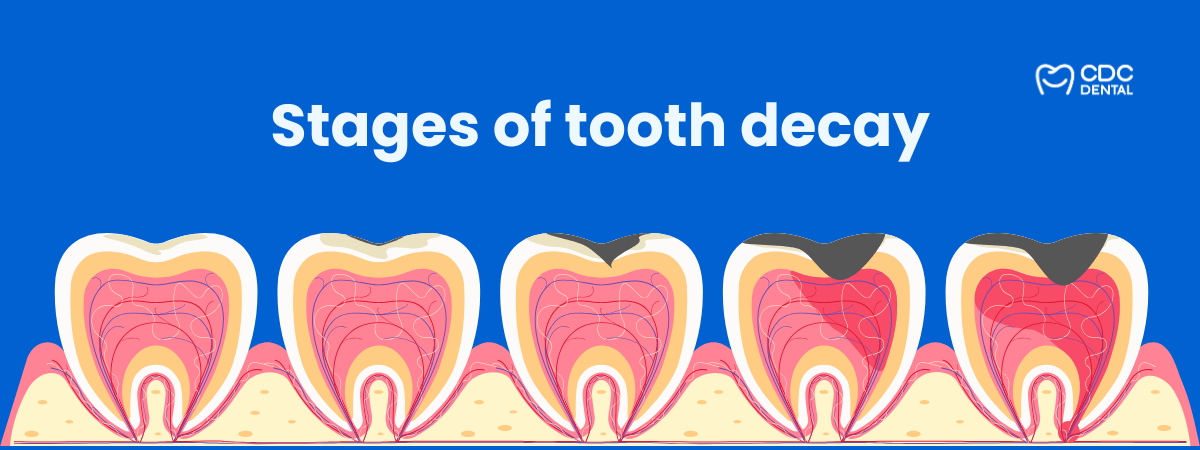
If you are wondering how a root canal is done, it generally consists of 2 major stages: the root canal procedure itself and the final restoration.
Step 1: Access and Removal Making an opening in the tooth to remove the damaged and infected nerve tissue.
Step 2: Cleaning and Disinfecting Flushing and cleaning the root canals with antibacterial solutions.
Step 3: Sealing Filling the canals with a biocompatible material to prevent any future infection.
Post & Core Buildup
After a root canal, the remaining tooth structure is often fragile. It is usually necessary to strengthen the tooth with a dental post and core buildup to support the upcoming crown.
Dental Crown
The final step is placing a crown to protect the treated tooth from fracturing. A crown restores the tooth's full function and appearance, and it can be made from various materials like ceramics or metal.
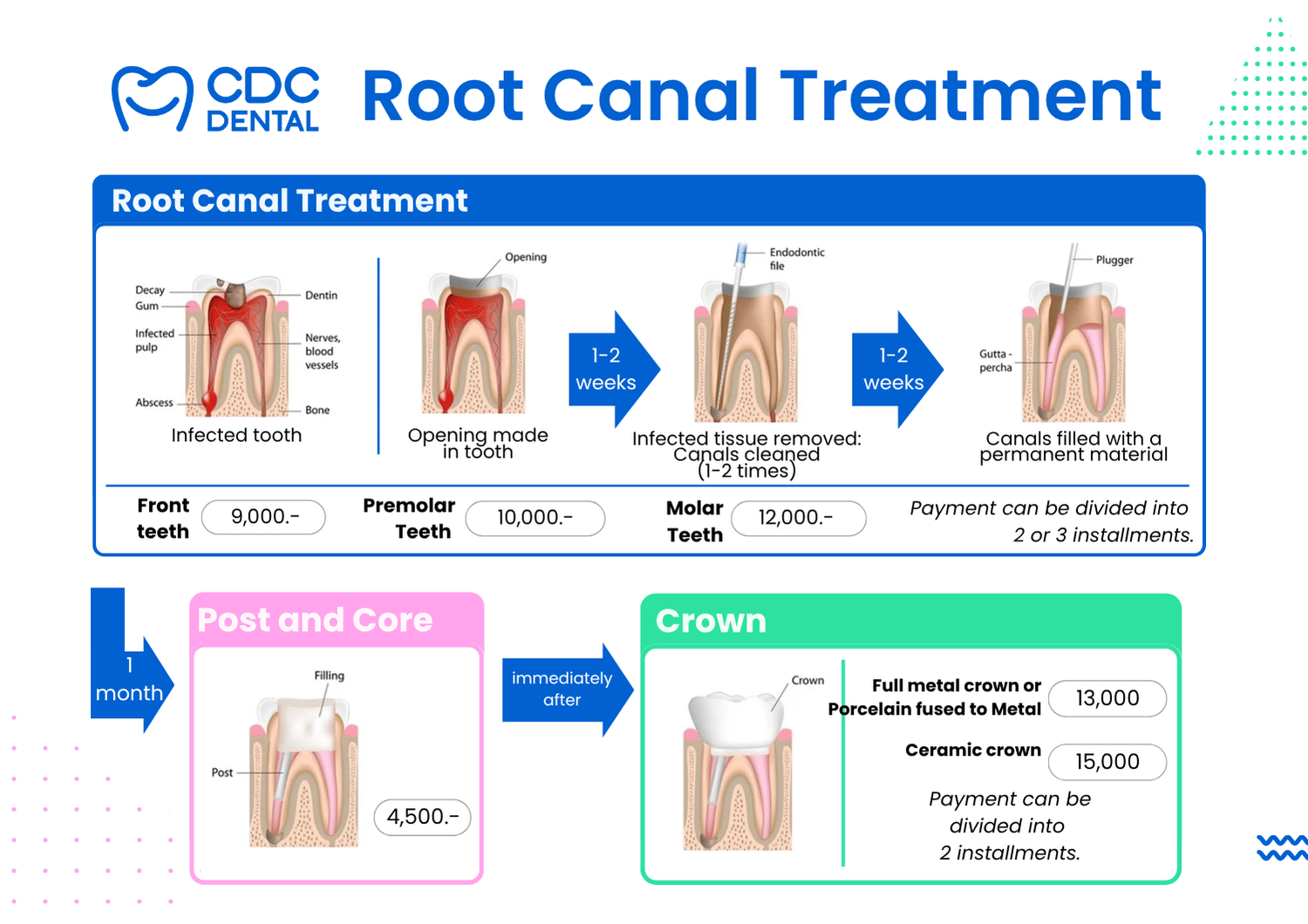
Many patients are concerned about the cost. At CDC Dental, we ensure transparency by offering the same price as locals. The cost of a root canal depends on the type and location of the tooth:
CDC Dental offers a convenient installment payment system where you pay per visit. For example, if a front tooth root canal costs 9,000 THB (~$250 USD), you can pay 4,500 THB (~$125 USD) on your first visit and the remaining 4,500 THB on the second visit (appointments are usually spaced 2-3 weeks apart). This makes managing your dental budget much easier.
*Treatment costs may vary depending on the complexity of each individual case. Your dentist will always explain the finalized cost to you beforehand.
One of the most frequently asked questions is whether a root canal is painful. Thanks to modern anesthetics and advanced dental techniques, a root canal today is virtually painless. You may feel a bit of soreness for a few days after the procedure once the anesthesia wears off, but this can easily be managed with over-the-counter or prescribed painkillers. In fact, patients experiencing severe toothaches usually feel immense relief immediately after their first visit.
You might be wondering how many appointments you need to complete the procedure. Typically, a root canal requires 2 to 4 visits, depending on:
And how long does each appointment take? A rough timeline per visit looks like this:
Making the choice between saving a tooth with a root canal or pulling it out depends on a few key factors:
Many people confuse root canals with dental implants. While both restore your smile, they are fundamentally different treatments. A root canal saves your existing natural tooth, whereas an implant replaces a completely missing or extracted tooth. Understanding this difference helps you choose the best treatment plan for your oral health.
Where is the best clinic for root canal treatment Thailand, specifically a root canal near me in Bangkok?
If you are looking for an English speaking dentist and team for a root canal near me in Bangkok, CDC Dental provides care at 2 highly accessible locations. Our Chatuchak Dental Center branch is near BTS Saphan Khwai, and our other branch is on Lat Phrao 109. Both are staffed with specialists ready to assist you.
Can I use Social Security or international health insurance?
Thai social security covers up to 900 THB/year for locals without advance payment. For expats, long-term residents, and tourists, we are happy to provide detailed medical certificates and receipts for you to file claims with your international health insurance.
Can you recommend a clinic near BTS Saphan Khwai or Ari?
CDC Dental (Chatuchak branch) is located just a short walk from BTS Saphan Khwai. It is incredibly convenient for patients living or working in the Chatuchak, Ari, Phahonyothin, and Pradiphat areas, fully equipped with state-of-the-art endodontic tools.
Is there a branch in the Bang Kapi or Lat Phrao area?
Yes, patients residing in Bang Kapi, Ramkhamhaeng, or Lat Phrao can easily access our CDC Dental Lat Phrao 109 branch (formerly Prinya Dental Clinic), located conveniently near Lat Phrao 107 and 101.
A root canal is an excellent dental solution to save your severely damaged or infected tooth, allowing you to maintain your natural smile for much longer. Although it requires an investment of both time and money, the long-term benefits to your oral health make it completely worthwhile.
If you are experiencing severe toothaches or suspect you need treatment, it's vital to consult with our specialized team at CDC Dental to receive an accurate diagnosis and treatment plan tailored to your needs.
Contact CDC Dental today for a free consultation.
Feel free to add us on LINE, WhatsApp, or give us a call to schedule an appointment.
(Chatuchak Dental Center) Near BTS Saphan Khwai, Ari, Chatuchak
Call 097-925-2424(Formerly Prinya Dental Clinic) Near Bang Kapi, Ramkhamhaeng, Lat Phrao 101
Call 097-925-2442Specialists are available for consultation daily.
Open everyday from 10:00 AM - 8:00 PM
Peters OA, Rossi-Fedele G, George R, Kumar K, Timmerman A, Wright PP. Guidelines for non-surgical root canal treatment. Aust Endod J. 2024 Aug;50(2):202-214. doi: 10.1111/aej.12848. Epub 2024 Jun 12. PMID: 38864671.

Root Canal Treatment Specialist (Endodontist)